
 347-787-6824
The Extraterritorial Reach of U.S. Trademark Remedies After Abitron
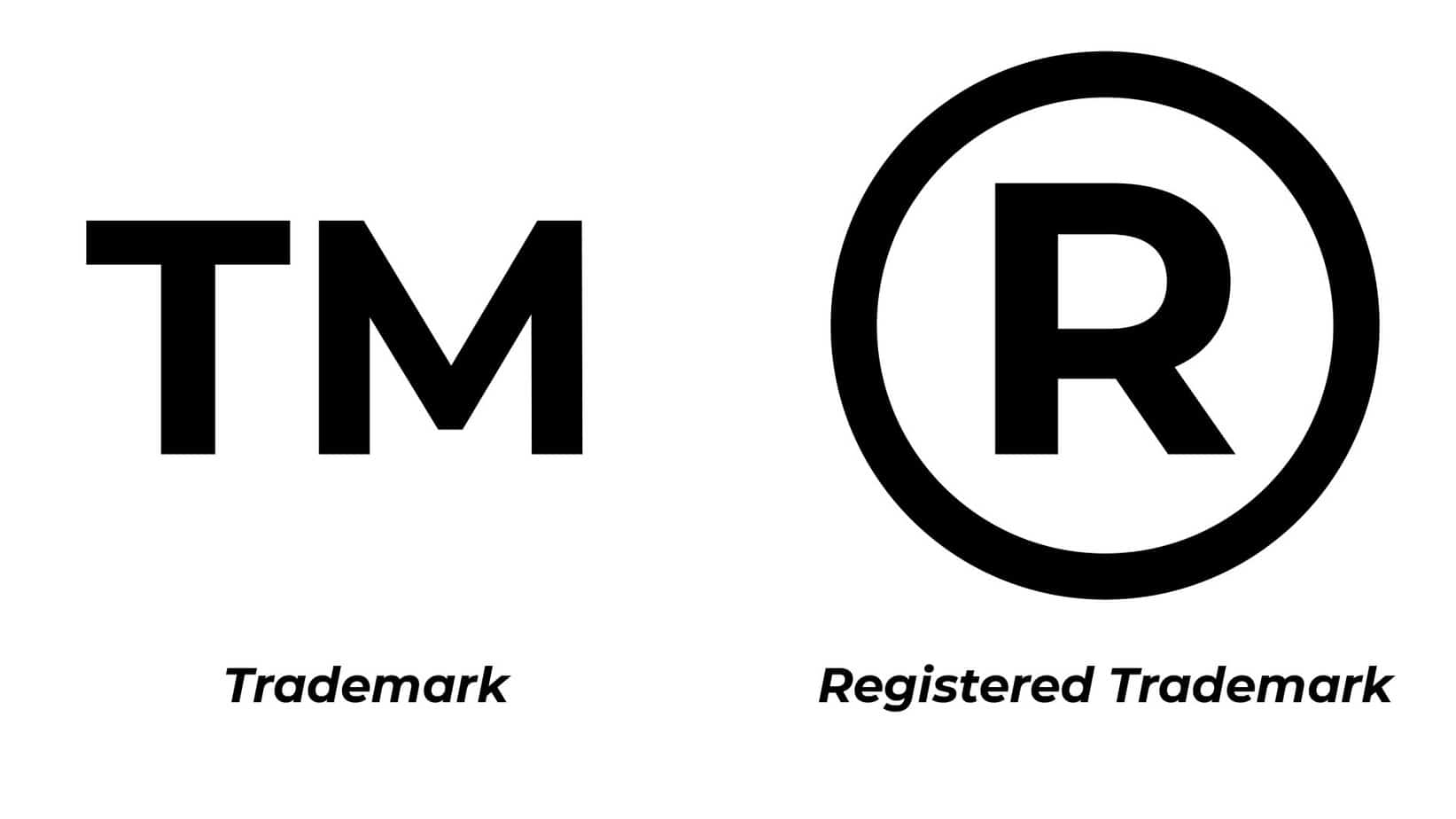
Image Source: https://www.northwestregisteredagent.com/blaugg-blog/should-you-have-a-registered-trademark
Section 1117(a) of the Lanham Act provides for the recovery of a defendant’s profits in trademark infringement suits.[1] Federal courts have often struggled over when American trademark law applies to foreign sales. The Supreme Court’s unanimous decision in Abitron Austria GmbH v. Hetronic Intl., Inc., 600 U.S. 412 (2023) established that Lanham Act provision claims apply only where the infringing “use in commerce” is domestic, crippling actionability of wholly foreign uses, even when confusion or economic effects in the U.S. are present.[2] Circuit courts are now actively deciding how to handle global profit disgorgement and online cross-border commerce.
Understanding the Supreme Court’s Decision in Abitron
The presumption against extraterritoriality is a canon of statutory construction in United States law. It establishes the baseline rule that, unless a contrary intent appears, federal statutes apply only within the territorial jurisdiction of the United States.[3] The presumption against extraterritoriality is analyzed by applying a two-step test.[4] Justice Alito’s majority opinion in Abitron, built upon the existing two-step framework to create a modern version of the presumption against extraterritoriality test.
Step One: Determining whether the statutory text gives a clear, affirmative indication that it applies extraterritorially. If there is an explicit indication that the statute is supposed to be applied extraterritorially then the presumption is overcome and there is no need to continue onto step two.[5]
Step Two: Resolving whether a claim “seeks a permissible domestic or impermissible foreign application of the provision.”[6] A court must identify the focus of Congress’ concern that underlies the statute. This focus includes the conduct the statute aims to regulate, or the parties the statute attempts to protect.[7] Courts then must determine where the conduct relevant to that focus occurred.[8] The plaintiff must be able to establish that the conduct relevant to the statute’s focus occurred in the United States. If the challenged conduct relevant to the statute’s focus occurred in another country, then the case involves an impermissible extraterritorial application regardless of any other conduct that occurred in United States territory.[9]
Justice Alito then put Lanham Act §§ 1114, 1125(a)(1) through his new two-step framework to determine if they overcame the presumption against extraterritoriality. They did not.
Step One in Abitron: When a statute does not include an express statement of extraterritoriality it is very rare that it will overcome the presumption against extraterritoriality.[10] The opinion notes that both § 1114 and § 1125(a)(1) of the Lanham Act are quiet on their extraterritorial application.[11] Therefore, both fail to overcome the presumption against extraterritoriality based on an express statement.[12] The respondent tried to argue that extraterritoriality is present due to the Lanham Act defining commerce as “all commerce which may lawfully be regulated by Congress[,]” which includes foreign commerce.[13] However, the Court shot that down, reaffirming that even express statutory references to “foreign commerce” is not enough to overcome the presumption against extraterritoriality.[14]
Step Two in Abitron: Because § 1114 and § 1125 of the Lanham Act failed to overcome the presumption against extraterritoriality in step one, the Court proceeds to step two and considers the focus that underlies both provisions. Justice Alito finds that both parties missed the “conduct relevant to the focus” and centered their arguments around outdated interpretations of solely the “focus” of the Lanham Act from Steele v. Bulova Watch Co., 344 U.S. 280 (1952). [15] The Court concludes that the “conduct relevant to the focus” is infringing use in commerce. However, the infringing use in commerce must take place within the United States to constitute a permissible domestic claim arising under the Lanham Act.
The Supreme Court offered no opinion on how to apply the case at hand under their new extraterritoriality standard of the “use in commerce” being the dividing line between impermissible foreign and permissible domestic applications of § 1114 and § 1125(a)(1) of the Lanham Act.[16] The judgement was vacated and remanded back to the 10th Circuit for further proceedings consistent with the Supreme Court’s new interpretation of extraterritoriality.[17]

Image Source: https://www.history.com/articles/supreme-court-facts
The Subsequent 10th Circuit Decision: Disgorgement of Foreign Profits & The Causal Nexus Requirement
On remand from the Supreme Court, the 10th Circuit provided the most detailed framework for calculating disgorgement in cases involving foreign sales after Abitron.[18] The court held that purely foreign sales in cases where the infringing conduct occurred entirely abroad could not serve as predicate for liability or disgorgement under § 1117(a) of the Lanham Act because of the Supreme Court’s new understanding of extraterritoriality, even if the good ultimately reached the United States or caused economic loss here.[19]
However, the 10th Circuit distinguished domestic economic losses resulting from wholly foreign infringing conduct, from foreign sales profits driven directly from domestic infringing conduct. The court concluded that the plaintiff may seek disgorgement from foreign sales that arose from domestic infringement because “those profits represent the fruits of a domestic injury[.]”[20] Although, in order to disgorge such foreign profits, the burden is on the plaintiff to prove that domestic infringement resulted in foreign sales with reasonable certainty.[21] This requires that any monetary relief must “share a causal nexus” with the domestic infringing conduct.[22] In other words, the plaintiff must be able to prove that “the defendant’s sales were ‘proximately caused’ by the infringement.”[23] Evidence that may help Plaintiffs establish this proximate cause include: market share analysis; consumer surveys demonstrating that the infringing mark drove purchasing decisions; and/or expert testimony on profit attribution.
The court cautioned against allowing “merely incidental” domestic conduct to serve as sufficient reason for sweeping foreign disgorgement and confirmed that only foreign profits that flowed “directly from [plaintiff’s] domestic injuries, as prescribed under § 1114(1)(a) and § 1125(a)(1), may be recovered.”[24] The existing § 1117(a) framework that shifts the burden onto the plaintiff to prove total sales before shifting to the defendant to prove what portion of the alleged total is not attributable to infringing activity exists within the 10th Circuit’s new causal-nexus overlay.[25]
After the 10th Circuit’s decision in Hetronic provided the new framework from which a plaintiff can disgorge profits from a domestic infringer, the 5th Circuit proceeded to further limit disgorgement by confirming the equitable framework under § 1117(a) of the Lanham Act. In Trojan Battery Co., L.L.C. v. Golf Carts of Cypress, L.L.C., 175 F.4th 582 (5th Cir. 2026), the court concluded that courts have discretion to award profits “subject to the principles of equity” and review such awards for abuse of discretion. The factors a court should consider to determine whether the disgorgement award was equitable include, but are not limited to:
(1) whether the defendant had the intent to confuse or deceive, (2) whether sales have been diverted, (3) the adequacy of other remedies, (4) any unreasonable delay by the plaintiff in asserting his rights, (5) the public interest in making the misconduct unprofitable, and (6) whether it is a case of palming off.[26]
While Trojan Battery concerns domestic sales, this new understanding of courts discretionary power under § 1117(a) of the Lanham Act applies to foreign disgorgement all the same. Building on the holding that a plaintiff must prove either actual damages or willful infringement as a prerequisite to recover disgorgement of profits from Hetronic.[27] Together, these two decisions lay the foundation on how to balance recovery via disgorgement equitably in all future Lanham Act § 1117(a) cases.
Online and Cross-Border Commerce: Targeting U.S. Consumers
Earlier this year, the 4th Circuit expressly confirmed that the effects-focused test derived from Steele, which both parties in Abitron based their arguments on, was no longer good law in their decision in dmarcian, Inc. v. DMARC Advisor BV, 182 F.4th 289 (4th Cir. 2026).[28] The court instead applied the new conduct-focused standard from Abitron, to examine cross-border digital commerce disputes.[29]
The 4th Circuit’s decision expands upon the Supreme Court’s definition of domestic “use in commerce” and clarifies that it encompasses “marketing, advertising, and distributing activities” directed at U.S. consumers, not only direct sales to the United States.[30] The court justifies this decision by drawing a parallel between how if the customer is in the United States then the direct sale occurs in the United States, and if the intended customer is in the United States then marketing, advertising, and distribution occurs in the United States.[31]
With this new definition of domestic “use in commerce” also came boundaries. The 4th Circuit held that in the case where a defendant maintained a website that was accessible in the United States but the defendant did no additional targeting or interacting with American consumers, then the Lanham Act likely wouldn’t apply.[32] The court decided to add this limitation because “most businesses around the world have websites that are accessible in the United States, [and] a rule that hinged on web access alone would [negate] the presumption against extraterritoriality[.]”[33]
However, in dmarcian, a button on the company’s website for customers in “the Americas” and communications with customers in the U.S. were sufficient to determine advertising to U.S. markets.[34] Therefore, it seems as though courts may be quite liberal in deciding what constitutes targeting the U.S. market.
Evidence that indicates targeted U.S. marketing may now include: U.S.-directed offers; online/social media advertising; or U.S. distribution agreements. Even actions as small as explicit availability in the U.S. or communications with potential U.S. consumers may be found as evidence that indicates targeted U.S. marketing. These forms of evidence serve as practical ways to investigate the conduct-focused and causal questions addressed by dmarcian and Abitron. They should be viewed as illustrative evidentiary categories that help prove domestic availment, rather than a rigid checklist that automatically guarantees liability or recovery.
Key Takeaways & Current Applications
- Necessity for Domestic Conduct: Under the new two-step framework for testing the presumption against extraterritoriality handed down by the Supreme Court in Abitron, all actionable infringing use in U.S. commerce must be domestic in order to recover under § 1117(a) of the Lanham Act. Foreign activity connected to that use does not necessarily defeat the claim, but wholly foreign use cannot supply liability by itself.
- Shrinking of Disgorgement: Because of the courts’ new power to award profits subject to the principles of equity at their discretion, along with the curtailing of disgorgement of foreign profits, remedies in international trademark infringement disputes may decrease.
- Expanding of Domestic “in commerce” Conduct Fit for the Modern Era: The common law of the United States is already adjusting to the confirmation that the Lanham Act is not extraterritorial. In doing so, courts have brought the domestic “in commerce” conduct requirement into the online shopping era and held that marketing, advertising, and distribution in U.S. markets satisfies the requirement and therefore allows plaintiffs to recover under § 1117(a) of the Lanham Act. This offers domestic companies a safety blanket against foreign competition who act wholly international, but target U.S. consumers.
[2] Abitron Austria GmbH v. Hetronic Int’l, Inc., 600 U.S. 412, 428 (2023).
[3] Morrison v. Natl. Australia Bank Ltd., 561 U.S. 247, 255-56 (2010).
[4] RJR Nabisco v. European Community, 579 U.S. 325, 337 (2016).
[5] Abitron, 600 U.S. at 417-18 (quoting RJR Nabisco, 579 U.S. at 335-37).
[6] Id. at 418.
[7] Id.
[8] Id. (quoting WesternGeco LLC v. ION Geophysical Corp., 585 U.S. 407, 413 (2018)).
[9] Id.
[10] Id.
[11] 15 U.S.C. § 1114; 15 U.S.C. § 1125(a)(1).
[12] Abitron, 600 U.S. at 420.
[14] Abitron, 600 U.S. at 420 (citing Morrison, 561 U.S. at 262-63; see also RJR Nabisco, 579 U.S. at 344).
[15] Id. at 421-22 (distinguishing Steele v. Bulova Watch Co., 344 U.S. 280 (1952)).
[16] Id. at 423.
[17] Id. at 428.
[18] Hetronic Int’l, Inc. v. Hetronic Germany GmbH, 99 F.4th 1150, 1155 (10th Cir. 2024) (opinion on remand from Abitron Austria GmbH v. Hetronic Int’l, Inc., 600 U.S. 412 (2023)).
[19] Id. at 1166-67.
[20] Id. at 1172.
[21] Id.
[22] Id. at 1173.
[23] Id.
[24] Id. at 1172.
[25] Id.
[26] Trojan Battery Co., L.L.C. v. Golf Carts of Cypress, L.L.C., 175 F.4th 582 (5th Cir. 2026).
[27] Hetronic, 99 F.4th at 1172.
[28] dmarcian, Inc. v. DMARC Advisor BV, 182 F.4th 289, 301 (4th Cir. 2026).
[29] Id. at 302.
[30] Id.
[31] Id.
[32] Id.
[33] Id. at 302-03.
[34] Id. at 302.
