
Patent Litigation vs. Patent Prosecution: What’s the Difference?


Patent law is often misunderstood, especially when it comes to the terms patent litigation and patent prosecution. These two processes serve completely different purposes, but both are essential in protecting intellectual property. Knowing the difference helps inventors, businesses, and entrepreneurs navigate the complex world of patents more confidently.


This guide breaks down both processes in clear, simple language and shows why partnering with a skilled team of registered U.S. Patent Attorneys, like the LAW FIRM OF DAYREL SEWELL, PLLC, is crucial.


What Is Patent Litigation?


Patent litigation is the legal process that occurs when someone believes a patent has been infringed. In other words, it happens when parties disagree about patent rights, validity, or use.


This typically involves issues like:


  • Patent infringement
  • Patent dispute between two companies
  • Challenges to a patent’s validity (also called patent invalidation)
  • Defense against a patent infringement lawsuit


Patent litigation is handled in U.S. federal courts, and the outcomes can significantly impact entire industries.
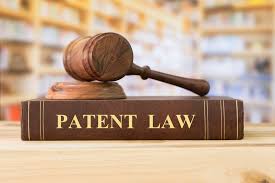
 

Patent Litigation

Source: Above The Law


How Patent Litigation Works?


A typical litigation process includes:


  1. Filing the Complaint – A patent owner files a lawsuit alleging that another party used their invention without permission.
  2. Determining Jurisdiction – Patent cases fall under federal jurisdiction, with appeals being heard by the Court of Appeals for the Federal Circuit.
  3. Discovery – Both sides gather evidence, technical documents, prototypes, and expert reports.
  4. Claim Construction (Markman Hearing) – The court determines the legal meaning and scope of each patent claim.
  5. Trial or Settlement – Many cases settle, but high-profile disputes often proceed to trial.
  6. Judgment – The court decides on infringement, invalidation, and damages.


What Is Patent Prosecution?


Patent prosecution involves preparing, filing, and negotiating a patent application with the United States Patent and Trademark Office (USPTO). 


What Is the Process of Patent Prosecution?


The patent prosecution process generally includes:


  1. Patent search and analysis
  2. Drafting and filing the application
  3. USPTO examination
  4. Responses to Office Actions
  5. Allowance or final rejection


When handled by an experienced attorney, prosecution becomes more strategic and increases the chances of patent approval.

 

Patent Prosecution

Source: Dennemeyer.com


Key Differences Between Patent Litigation and Patent Prosecution


The most significant difference between these two areas is their purpose. Patent prosecution establishes a patent, while patent litigation enforces or challenges it. Prosecution occurs before the USPTO, whereas litigation takes place in federal courts. Litigation is adversarial and evidence-driven, while prosecution is collaborative and administrative. Patent litigators argue cases; patent prosecutors craft applications. Litigation resolves disputes such as infringement or invalidation, while prosecution builds the patent foundation that may later be defended in court.


Both areas complement each other, and a strong intellectual property strategy requires an understanding of how each protects innovation at different stages of development.


Why Choose the LAW FIRM OF DAYREL SEWELL, PLLC?


The LAW FIRM OF DAYREL SEWELL, PLLC is a highly respected New York intellectual property firm known for its dual strength in patent litigation and patent prosecution. Whether you’re dealing with a patent infringement lawsuit or seeking guidance through the patent prosecution highway, their expertise offers unmatched legal protection.


Why Clients Trust Them:


  • Extensive experience in patent lawsuit cases
  • Skilled in handling patent disputes and patent invalidation matters
  • Deep technical understanding of patent-heavy industries
  • Comprehensive support across both patent litigation and prosecution
  • Strategic, client-focused legal representation
  • Proven success across federal jurisdictions


From securing your patents to defending them in court, the LAW FIRM OF DAYREL SEWELL, PLLC provides end-to-end IP protection for businesses, inventors, and innovators.


Final Thoughts


Understanding the difference between patent litigation vs. patent prosecution is essential for anyone developing new products or technologies. Patent prosecution secures your rights, while patent litigation defends them. Both processes require specialized legal expertise, and both can significantly impact your business.


For the strongest protection of your intellectual property, partner with a firm experienced in every phase of patent law.


Contact The LAW FIRM OF DAYREL SEWELL, PLLC  today and get expert support in patent litigation, patent prosecution, patent disputes, and complex intellectual property matters.


Your innovation deserves the best protection, and this firm is here to provide it.


FAQs


What is a patent litigator?

A patent litigator is a specialized attorney who represents clients in patent-related disputes, including patent infringement lawsuits, patent invalidation challenges, and complex patent dispute matters.


What is a patent prosecutor?

A patent prosecutor, also known as a patent prosecution lawyer, is an attorney licensed to practice before the USPTO. Their role is to prepare, file, and manage patent applications, draft strong patent claims, and respond to examiner rejections.


What percentage of patents are litigated?

Only a small portion of all issued patents ever end up in court. Studies show that roughly 1%–3% of patents are litigated, meaning most inventions never become the subject of a patent lawsuit.


What is patent invalidation?

Patent invalidation is a legal process in which one party challenges the validity of an issued patent, often during a patent infringement lawsuit. The goal is to prove the patent should never have been granted due to issues such as prior art, lack of novelty, or obviousness. 


What is the Patent Prosecution Highway?

The Patent Prosecution Highway (PPH) is an international program that allows applicants to accelerate the examination of a patent application. If a corresponding application has already received a favorable ruling from another participating patent office, the USPTO may fast-track the review process. This can significantly shorten the time it takes to complete the patent prosecution process. The PPH is especially useful for inventors filing patents in multiple countries and seeking quicker approval.


Intellectual Property Litigation: Strategies for Resolving Disputes and Protecting Rights


Intellectual Property Litigation: Strategies for Resolving Disputes and Protecting Rights

Intellectual Property Litigation: Strategies for Resolving Disputes and Protecting Rights

Intellectual Property (IP) litigation has become increasingly complex in the modern era, as technological advancements continue to blur the lines between creativity, innovation, and ownership. This article explores key strategies for resolving disputes and protecting rights in IP litigation, with a focus on recent case law that has shaped the legal landscape. From patent and trademark infringement to copyright disputes, understanding effective litigation strategies is crucial for both rights holders and accused infringers.

Intellectual Property encompasses a range of rights, including patents, trademarks, copyrights, and trade secrets. Disputes often arise when parties assert their rights or defend against allegations of infringement. The dynamic nature of technology and creativity requires a nuanced approach to litigation.

Before initiating litigation, parties should explore alternative dispute resolution methods, such as negotiation, mediation, or arbitration. These methods can be cost-effective and lead to quicker resolutions. Patent infringement cases rarely go to bench or jury trial and are settlement before going to trial at the claim construction stage.i Additionally, conducting a thorough pre-litigation investigation is crucial, involving the identification of key evidence, estimated legal costs, potential witnesses, and the assessment of the strength of the case.

I. Recent Case Law Trends

A. Notable Cases in Patent Litigation and Strategy Implications

a. Alice Corp. v. CLS Bank Int’l, 573 U.S. 208 (2014): The Supreme Court’s decision clarified the patent eligibility of software and business method claims, impacting the approach to patent litigation in these areas. The court used the two-step framework from Mayo Collaborative Services v. Prometheus Laboratories, Inc., 132 S. Ct. 1289 (2012) to determine patent eligibility of a computer-implemented schedule for mitigating settlement risk. The court determined that the generic computer implementation did not provide an “inventive concept” to transform the abstract idea into a patent-eligible application under 35 U.S.C. § 101. The invention must be something that could lead to a patent.ii

Careful Claim Drafting: Post-Alice, patent holders must draft claims with an emphasis on technical details and inventive concepts to overcome eligibility challenges and to avoid ceasing at abstract ideas of a concept.

b. TC Heartland LLC v. Kraft Foods Group Brands LLC, 137 S. Ct. 1219 (2017): This case reshaped venue rules for patent infringement lawsuits, limiting the jurisdictions where cases can be filed. The court held that a domestic corporation “resides” only in its state of incorporation for purposes of the patent venue statute.iii

Strategic Venue Selection: On both the plaintiff and defendant’s side, TC Heartland has led to a strategic consideration of the most favorable venue for patent litigation, impacting case outcomes. Fact-intensive inquiry may ensue depending on whether parties select their venue based on where “the defendant had committed acts of infringement and has a regular and established place of business” or the state of incorporation.iv

B. Notable Cases in Trademark Litigation and Strategy Implications

a. Matal v. Tam, 137 S. Ct. 1744 (2017): The Supreme Court’s decision in this case held that the Lanham Act’s prohibition on disparaging trademarksv violated the First Amendment and amounts to viewpoint discrimination. The First Amendment does not allow the government to prohibit the expression of an idea simply because it is offensive. The court also refused to accept the contention that trademarks are government speech, impacting the criteria for registering trademarks.vi

Careful Selection of Marks: The Matal decision underscores the importance of choosing distinctive and non-disparaging marks.

b. Patent and Trademark Office v. Booking.com B. V., 140 S. Ct. 2298 (2020): The Supreme Court ruled that adding “.com” to a generic term can result in a protectable trademark.

Expanding Protection: Booking.com highlights the potential for obtaining trademark protection for domain names that include generic terms. However, in order to be capable of trademark protection, the use of the term as a brand name has to be distinctive enough that the consumer has to perceive the term as a source identifier.vii

C. Notable Cases in Copyright Litigation and Strategy Implications

a. Google LLC v. Oracle Am., Inc., 141 S. Ct. 1183 (2021): The Supreme Court’s decision clarified the fair useviii doctrine in the context of software code, impacting the boundaries of copyright protection. The court ruled that Defendant Google’s copying of a portion of Plaintiff Oracle’s Java SE computer program was fair use because Google’s use of the Java API was transformative, allowing the creation of new products and expanding use of Android-based smartphones, and had little market effect on Oracle.

Fair Use Considerations: Oracle provides guidance on the fair use analysis, emphasizing transformative use and the nature of the copyrighted work, especially in the area of software interface use and development.ix

b. Fourth Estate Pub. Benefit Corp. v. Wall-Street.com, 139 S. Ct. 881 (2019): This case clarified the registration requirement for filing copyright infringement lawsuits.x Registration has been made when the Copyright Office has registered a copyright after examining a properly filed application. The Register’s action triggers a copyright owner’s entitlement to sue not upon submission of an application for registration.xi

Timely Registration: Fourth Estate underscores the importance of promptly registering copyrights for litigation purposes because it affects the copyright owner’s leverage in threats to initiate immediate legal action for copyright infringements.xii Without a properly and timely copyright registration, the copyright owner may be unable to seek a preliminary injunction. Furthermore, it will be further costly for small copyright owners if they need to use the expensive expedited process for copyright registration.xiii

II. Key Litigation Strategies

A. Early Case Assessment

Conducting a detailed early case assessment allows parties to evaluate the merits of their claims or defenses, helping in the formulation of effective legal strategies. It also allows to measure potential costs, what tasks could be complete in-house, and how long the litigation make take.xiv Considering the cost and expense of IP litigation, early case assessment also allows counsel and the client to consider out-of-court solutions such as mediation, negotiation, and/or settlement.

B. Effective Use of Experts

Engaging qualified experts is crucial in IP litigation to provide technical or industry-specific insights that can influence the court’s understanding of complex issues. The expert can simplify technical jargon and translate intricate scientific or technical processes for easier digestion by the court.xv In the earlier part of the case, the expert’s advice can also assist counsel with whether there is a valid intellectual property claim.xvi They can also help with negotiations and settlement considerations and give objective expert advice on finding a fair ground between the parties.xvii

C. Enforcement of IP Rights Abroad

Globalization has increased the need for enforcing IP rights internationally, necessitating a strategic approach to cross-border litigation and coordination with foreign counsel. In case of infringement, the availability of litigation tools depends on the jurisdiction and the intentionality of the infringement.xviii The enforcement process may involve cease and desist letters and/or various judicial proceedings to preserve evidence of the alleged IP infringement, seek injunction and eventually damages.xix Because of the difficulty of enforcing IP rights globally, international bodies such as the World Trade Organization have established international agreements such as the Trade-related Aspects of Intellectual Property Rights (TRIPS) agreement to provide judicial measures to protect IP rights around the world.xx

D. Post-Grant Proceedings

Utilizing post-grant proceedings for patents, such as Inter Partes Review (IPR), Post-Grant Reviews (PGRs), and Ex Parte Reexaminations can be an effective strategy to challenge the validity of asserted IP rights before the relevant administrative bodies. In choosing which post-grant proceeding to use, it is important to consider factors such as “the nature of the dispute, the availability of prior art, and desired level of involvement from the owner or challenger.”xxi

IP litigation requires a multifaceted approach that considers legal, technical, and strategic aspects. Recent case law developments highlight the evolving nature of intellectual property disputes, necessitating a dynamic and well-informed strategy for both rights holders and accused infringers. Understanding the impact of recent decisions and integrating effective litigation strategies can significantly influence the outcome of IP disputes and safeguard the interests of the parties involved.

iJames C. Yoon, IP Litigation in United States,Wilson Sonsini Goodrich & Rosati (Aug. 4, 2016),https://law.stanford.edu/wp-content/uploads/2016/07/Revised-Stanford-August-4-2016-Class-Presentation.pdf.

ii Julia Powles, Alice v. CLS Bank: United States Supreme Court Establishes General Patentability Test, WIPO Magazine (Aug. 2014),https://www.wipo.int/wipo_magazine/en/2014/04/article_0004.html.

iii28 U.S.C. § 1400(b).

ivId.; see also “TC Heartland:” The End of an Era in Patent Litigation, Dorsey & Whiney LLP (May 25, 2017), https://www.dorsey.com/newsresources/publications/client-alerts/2017/05/tc-heartland.

v 15 U.S.C. § 1052.

viMatal v Tam: Supreme Court Holds Disparaging Trademark Ban Violates First Amendment,Scarinci Hollenback, LLC (June 27, 2017),https://constitutionallawreporter.com/2017/06/27/matal-v-tam-2017/.

viiBass, Berry & Sims PLC, Impact of Supreme Court Trademark Decision in Booking.com Case,JD Supra (July 13, 2020), https://www.jdsupra.com/legalnews/impact-of-supreme-court-trademark-91400/.

viii17 U.S.C. § 107.

ixJeffrey Robert Kaufman, What Google v. Oracle Means for Open Source, Opensource.com (May 5, 2021), https://opensource.com/article/21/5/google-v-oracle.

x17 U.S.C. § 411(a).

xiFourth Estate Pub. Benefit Corp. v. Wall-Street.com,LLC, 139 S. Ct. 881 (2019).

xii Sylvia Zhang, A Guide to Fourth Estate v. Wall-Street.com, Harvard Law School (May 28, 2019), https://hls.harvard.edu/clinic-stories/legal-policy-work/a-guide-to-fourth-estate-v-wall-street-com/.

xiiiId.

xivPowles,supranote ii.

xvImportance of Expert Witness Testimonies in Intellectual Property Litigation, LITILI Group (Sept. 12, 2023), https://litiligroup.com/expert-witness-testimonies-in-intellectual-property-litigation/.

xviId.

xviiId.

xviiiSettling Disputes and Enforcing IP RightsWorld Intellectual Property Organization,https://www.wipo.int/sme/en/settle-ip-disputes.html#(last accessed on Feb. 21, 2024).

xixId.

xxEnforcement of intellectual property rights Enforcement of intellectual property rights, World Trade Organization,https://www.wto.org/english/tratop_e/trips_e/ipenforcement_e.htm(last access on Feb. 21, 2024).

xxiHoward Suh, USPTO Post-Grant Proceedings: An Overview, Fox Rothschild LLP (June 23, 2023),https://www.foxrothschild.com/publications/uspto-post-grant-proceedings-an-overview